
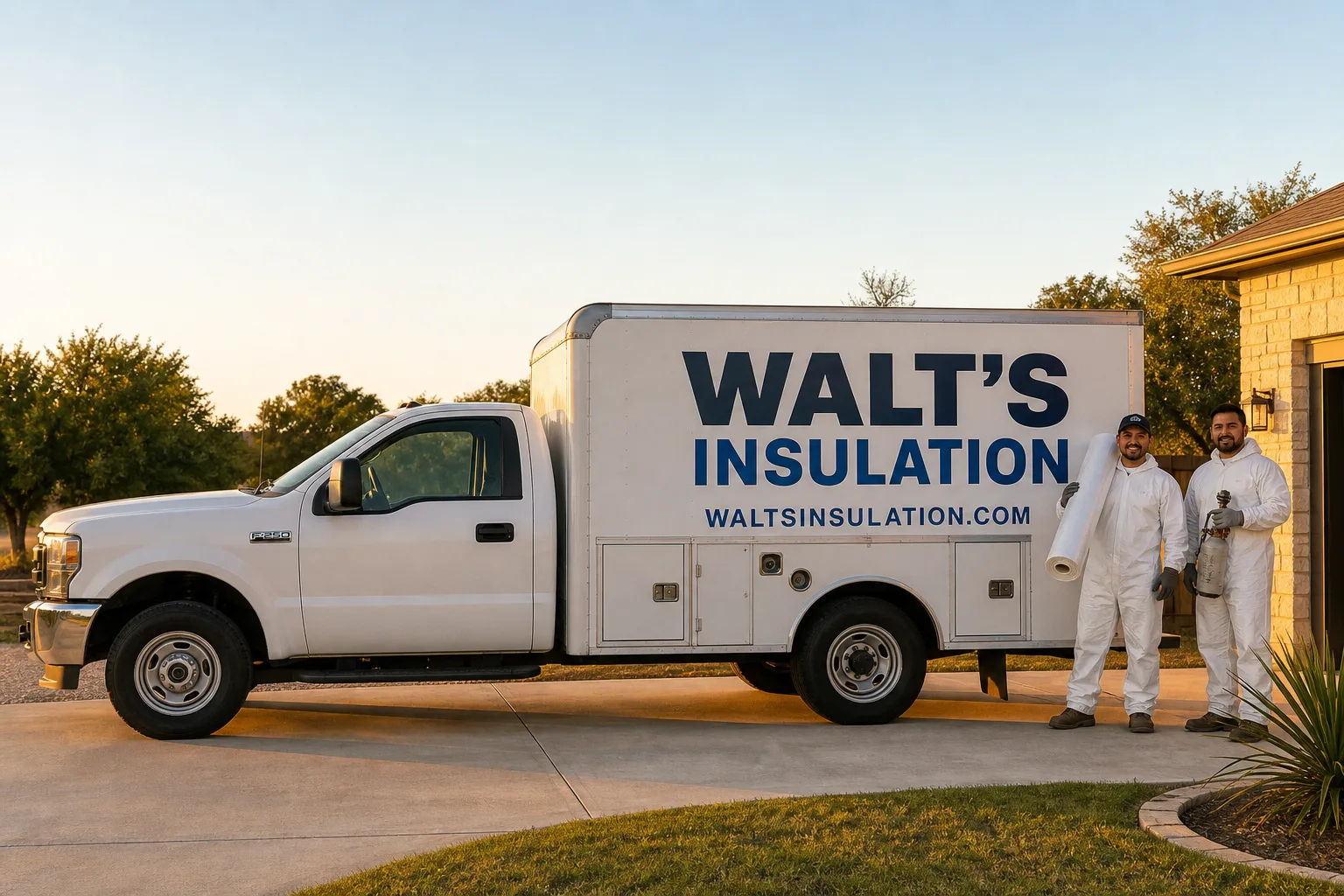
Insulation in Little Canada, MN
Insulation in Little Canada, MN starts with an honest look at what’s sitting above your ceiling and below your floors. Most homes in this first-ring suburb were built between 1950 and 1980, when R-11 or R-19 attic insulation was the norm. Minnesota’s Zone 6 code now calls for R-49 to R-60, which means nearly every house in Little Canada is running at less than half the insulation it should have. Crawl space encapsulation and vapor barrier work matters here too, because split-levels and ramblers with minimally insulated lower levels let ground moisture rise straight into living spaces. Call Walt’s Insulation at (866) 751-4428 and a real person answers, day or night.
Why Little Canada Homes Are Different
Little Canada is a fully built-out suburb of about 2.5 square miles. There’s no new construction to speak of. The housing stock runs hard toward post-WWII ramblers, split-levels, and modest two-stories from the 1950s through the 1970s. Those homes were built for a different energy era, when fuel was cheap and code enforcement was loose. Original fiberglass batts have settled or compressed over decades, and the shallow eave lines on 1960s ramblers trap that batt insulation at near-zero effective R-value where the rafter depth pinches out. We see this eave compression as the primary ice dam trigger in these neighborhoods. Fixing it means baffling before any blown-in addition goes in, which changes scope and pricing compared to deeper-attic homes in Roseville or Maplewood.
Little Canada sits in Minnesota Climate Zone 6. Outdoor temperatures regularly drop to -20°F, and annual heating degree days top 8,000. That indoor-outdoor differential makes air-sealing beneath insulation just as important as the R-value itself. Slab-on-grade and minimally insulated lower levels in split-level designs add a second retrofit layer beneath living spaces. Homes here need work done with the actual house in mind, not a generic install.
Our Main Little Canada Services
Little Canada homeowners call us most often about two problems: attics that need more insulation and crawl spaces that need a vapor barrier. Here’s what each involves locally.
Attic Insulation in Little Canada
Most Little Canada attics are sitting at R-11 to R-19 when they should be at R-49 or better. That gap shows up as ice dams on the low-slope rambler rooflines, cold bedrooms, and heating bills that climb every January. We start by checking eave depth and baffling, because the shallow cavities in 1960s ramblers need that prep work before any blown-in material goes down. Attic Insulation in Little Canada covers the full process, from baffle installation to final R-value verification, all backed by the Done Right Promise.
What happens when you call
- 1
A real person answersNo phone trees - you reach a local pro.
- 2
You get an upfront price rangeHonest numbers before anyone is dispatched.
- 3
A background-checked tech heads outLicensed & insured, dispatched right away.
- 4
You approve before work beginsNothing starts until you say go.
Crawl Space Encapsulation & Vapor Barrier in Little Canada
Crawl space encapsulation in Little Canada fixes the damp, musty lower levels common in the city’s split-levels and ramblers built on shallow foundations. Ground moisture rises through dirt or thin concrete floors, and with Zone 6 winters driving cold air under the house, condensation forms fast. A sealed vapor barrier stops that moisture at the source, keeps humidity out of living spaces, and makes the whole house easier to heat. We’ve been doing Crawl Space Encapsulation & Vapor Barrier work long enough to know that Little Canada’s 1950s and 60s foundations rarely have the drainage or clearance that newer builds do, so every job starts with a real look at what’s under the floor.
Crawl Space Vapor Barrier
Signs you need it
Damp smells rising through floors, condensation on ducts, and visible wet spots on concrete or dirt are the usual giveaways. If the crawl space feels humid in summer and cold in winter, a vapor barrier is overdue.
What it costs in Little Canada
Expect roughly $1,200 to $3,500 for a standard crawl space in Little Canada, depending on square footage and access.
How we do it
We clean the floor, lay a reinforced poly liner, seal seams with tape and mastic, and run the barrier up foundation walls. Fasteners go in at the sill plate, not mid-wall, so the seal holds.
Crawl Space Encapsulation
Signs you need it
Mold on framing, soggy insulation falling from floor joists, and doors that stick in summer point to full encapsulation rather than a simple liner. Standing water after rain is another clear signal.
What it costs in Little Canada
Complete encapsulation in Little Canada runs $4,000 to $9,000, with smaller split-level crawls on the low end and larger rambler footprints higher.
How we do it
We install a full liner system on floor and walls, seal all penetrations, add a dehumidifier if needed, and verify the space stays dry. The goal is a conditioned, sealed area that stays clean enough to store things in.
Crawl Space Insulation
Signs you need it
Cold floors in winter over crawl space areas, frozen pipes, and heating bills that don’t match the house size. If the floor feels like a slab but isn’t, insulation is missing or failed.
What it costs in Little Canada
Insulating a Little Canada crawl space costs between $800 and $2,200 depending on the method: batt between joists, rigid foam on walls, or spray foam at the rim.
How we do it
We inspect for moisture first, because insulation over a wet crawl space makes things worse. Then we install the right material for the specific foundation and venting pattern.
What Crawl Space Encapsulation & Vapor Barrier Costs in Little Canada
| Item | Typical range in Little Canada |
|---|---|
| Crawl space vapor barrier | $1,200 - $3,500 |
| Full crawl space encapsulation | $4,000 - $9,000 |
| Crawl space insulation | $800 - $2,200 |
Does crawl space encapsulation help with heating bills in Little Canada?
Yes. Sealing out ground moisture and cold air reduces the load on your furnace, especially in split-levels where the lower level sits half below grade. Most homeowners notice the difference within the first winter. Call (866) 751-4428 for a crawl space assessment and a straight quote.
Why is my Little Canada crawl space wet in winter but dry in summer?
Cold outside air hits the warmer crawl space and condenses on joists and walls. Winter condensation is common in Zone 6 homes with vented crawl spaces. Encapsulation stops that cycle by sealing the space. We can inspect yours this week if you call us.
Spray Foam Insulation in Little Canada
Spray foam insulation in Little Canada solves two problems at once: it insulates and it air-seals. That combination matters in Zone 6, where air leaks carry as much heat out of a 1950s rambler as poor insulation does. Closed-cell foam at the rim joist and attic floor stops the drafts that make bedrooms over the garage or above the crawl space feel ten degrees colder than the rest of the house. Spray Foam Insulation installs fast and bonds directly to framing, which is a real advantage in the tight eave cavities common on Little Canada rooflines.
Rim Joist Spray Foam
Signs you need it
Drafts along baseboards, cold floors at exterior walls, and spiders or insects entering near the foundation. Rim joists are the single leakiest spot in most Little Canada basements and crawl spaces.
What it costs in Little Canada
Rim joist spray foam in Little Canada typically costs $600 to $1,400 for a standard rambler or split-level.
How we do it
We clean the rim area, mask off windows and vents, and apply closed-cell foam to each joist bay. Coverage is continuous, so air can’t slip through gaps the way it does with batt insulation.
Closed-Cell Spray Foam
Signs you need it
Ice dams on low-slope rambler roofs, snow melting unevenly, or rooms that never hold temperature. Closed-cell foam adds structural strength and stops moisture movement.
What it costs in Little Canada
Closed-cell spray foam in Little Canada runs $2.50 to $4.50 per board foot, with attic applications usually landing between $3,500 and $7,500 total depending on square footage.
How we do it
We apply foam to the specified depth, check for voids, and trim any overspray. On roof decks we leave the required air gap for ventilation unless the attic is being converted to unvented.
What Spray Foam Insulation Costs in Little Canada
| Item | Typical range in Little Canada |
|---|---|
| Rim joist spray foam | $600 - $1,400 |
| Closed-cell spray foam (per board foot) | $2.50 - $4.50 |
| Typical attic spray foam job | $3,500 - $7,500 |
Is spray foam worth it in a 1960s Little Canada rambler?
Usually yes. The air-sealing benefit alone addresses the drafty construction of that era, and closed-cell foam fits the shallow eave cavities better than thick batts. We can evaluate your attic and give you numbers before you commit. Estimates are free.
Can spray foam cause ice dams in Little Canada?
It can if applied incorrectly on a vented roof deck without proper air channels. That’s why we inspect baffles and ventilation before any attic spray foam job. The ice dam risk in Little Canada comes from warm attics, and correctly installed foam reduces that warmth. Call (866) 751-4428 to have your roof checked first.
Blown-In Insulation in Little Canada
Blown-in insulation in Little Canada is the most cost-effective retrofit for the city’s 1950s and 60s ramblers. The shallow attic cavities in these homes make dense-pack and loose-fill methods the only practical way to hit R-49 or R-60 without major framing changes. Because original batts have compressed over decades, most Little Canada attics need a top-up or a full removal first, and the eave pinching we see on low-slope rooflines means baffling has to go in before anything gets blown on top. Blown-In Insulation covers the whole retrofit, including prep and final R-value confirmation.
Blown-In Cellulose
Signs you need it
Attic insulation that’s visibly settled below joist tops, rooms that overheat in summer, and ice dams in winter. Cellulose packs well into irregular cavities and provides a tighter air barrier than fiberglass.
What it costs in Little Canada
Blown-in cellulose in a Little Canada attic typically runs $1,200 to $2,800, including baffling where needed.
How we do it
We install eave baffles first, then blow cellulose to the target depth across the attic floor. Final R-value is checked against Minnesota’s Zone 6 requirement of R-49 or better.
Blown-In Fiberglass
Signs you need it
Old fiberglass batts that are thin, torn, or rodent-damaged. Loose-fill fiberglass is a good choice where the attic has consistent depth and no major air leaks.
What it costs in Little Canada
Blown-in fiberglass in Little Canada costs $1,000 to $2,500 for a typical rambler attic.
How we do it
We remove failed batts if needed, seal penetrations, and blow fiberglass to the specified R-value. Depth markers are set so coverage is uniform across the whole attic floor.
What Blown-In Insulation Costs in Little Canada
| Item | Typical range in Little Canada |
|---|---|
| Blown-in cellulose (attic) | $1,200 - $2,800 |
| Blown-in fiberglass (attic) | $1,000 - $2,500 |
| Dense-pack wall insulation | $2,000 - $5,000 |
How much R-value does my Little Canada attic need?
Minnesota’s Zone 6 code requires R-49 to R-60 in attics. Most Little Canada homes built between 1950 and 1980 have R-11 to R-19, so they’re at less than half the target. Call (866) 751-4428 and we’ll measure what’s up there and quote exactly what it takes to close the gap.
Can I just add insulation on top of my old fiberglass in Little Canada?
Sometimes you can, but only after checking eave baffles and air sealing. If the old batts are compressed, wet, or mouse-damaged, adding on top locks in those problems. We inspect before recommending a top-up or removal. The free second opinion on any written estimate applies to this work too.
Radiant Barrier Installation in Little Canada
Radiant barrier installation in Little Canada attacks the summer side of the energy equation. The city’s ramblers and split-levels bake under direct sun from June through September, and attic temperatures can push past 130°F. A radiant barrier stapled to the underside of the roof deck reflects that heat before it radiates down into living spaces, so the air conditioner isn’t fighting the attic all afternoon. Radiant Barrier Installation works alongside your existing insulation, which is why it makes sense for Little Canada homes that already have decent R-value but still overheat upstairs.
Attic Radiant Barrier
Signs you need it
Second-story rooms that are hot in summer despite adequate insulation, an attic that’s unbearable to walk through in July, and air conditioning that runs constantly. Radiant heat from the roof deck is the culprit.
What it costs in Little Canada
Radiant barrier in a standard Little Canada attic runs $800 to $2,200 depending on roof complexity and access.
How we do it
We staple reflective foil to the underside of rafters, leaving proper air flow at the ridge and eave lines. The barrier faces the attic space, not the roof deck, so dust can’t degrade its reflectivity.
Radiant Barrier & Ventilation
Signs you need it
High attic humidity in winter, frost on roof sheathing, and ice dams in spots where venting is blocked. Radiant barrier alone won’t fix venting problems, but pairing it with better airflow makes both work.
What it costs in Little Canada
Adding radiant barrier alongside ventilation improvements in Little Canada typically costs $1,500 to $3,500.
How we do it
We check existing soffit and ridge venting first, then position the barrier so it doesn’t block air from eave to ridge. The result is a cooler attic in summer and a drier one in winter.
What Radiant Barrier Installation Costs in Little Canada
| Item | Typical range in Little Canada |
|---|---|
| Attic radiant barrier | $800 - $2,200 |
| Radiant barrier with ventilation | $1,500 - $3,500 |
| Radiant barrier on roof deck | $1,200 - $3,000 |
Does radiant barrier help with heating bills in Little Canada?
Mostly no. Radiant barrier is a summer tool. It reflects radiant heat, which matters when attics are hot, not when they’re cold. Little Canada winters call for R-value and air sealing. We recommend radiant barrier as a supplement, not a replacement for insulation. Call (866) 751-4428 if you want an honest read on whether it’s worth it for your roof orientation.
Will a radiant barrier stop ice dams on my Little Canada rambler?
No. Ice dams come from warm attic air melting snow on the roof, and radiant barrier doesn’t change attic temperature much in winter. Air sealing and insulation at the attic floor are what stop ice dams. We’d rather tell you that upfront than sell you something that won’t fix the problem.
Insulation Removal & Replacement in Little Canada
Insulation removal and replacement in Little Canada usually starts with an attic full of 60-year-old fiberglass that’s been compacted, chewed on, or soaked by ice dam leaks. Homes from the 1950s and 60s often have batts that are original, and after decades of moisture and rodent traffic they’re doing almost nothing. Pulling that material out and starting fresh is the only way to hit the R-49 to R-60 standard Little Canada homes need. Insulation Removal & Replacement includes full vacuum extraction and proper disposal, which matters in a city where everything was built tight to the lot line.
Attic Insulation Removal
Signs you need it
Moldy or water-stained insulation, rodent droppings scattered through the batts, and material that’s compressed to a fraction of its original thickness. Any of those means removal before new insulation goes in.
What it costs in Little Canada
Attic insulation removal in Little Canada runs $1,000 to $2,500 for a standard rambler, more if access is tight.
How we do it
We run a high-powered vacuum from the attic to a truck-mounted container, remove every bit of old material, and leave the attic floor clean for inspection and air sealing.
Vermiculite & Old Insulation Removal
Signs you need it
Grayish, pebble-like material in the attic is often vermiculite, and some vermiculite contains asbestos. If you see it, don’t disturb it. Call us and we’ll handle the testing and safe removal process.
What it costs in Little Canada
Vermiculite removal in Little Canada ranges from $3,000 to $8,000 depending on volume and whether asbestos testing is required.
How we do it
We follow containment and disposal protocols for potentially hazardous material, verify the attic is clear, and then talk through what insulation should go back in.
What Insulation Removal & Replacement Costs in Little Canada
| Item | Typical range in Little Canada |
|---|---|
| Attic insulation removal | $1,000 - $2,500 |
| Vermiculite removal | $3,000 - $8,000 |
| Full removal and replacement | $2,500 - $6,000 |
How do I know if my Little Canada attic insulation needs to be removed or just topped up?
Remove it if it’s wet, moldy, vermiculite, or full of rodent droppings. Top it up if it’s dry, clean, and just thin from age. The only way to know is to look. We offer the inspection as a free second opinion on any written estimate.
Can you remove old insulation from a tight 1960s attic in Little Canada?
Yes. Many Little Canada ramblers have attics with minimal headroom, and our vacuum systems work in spaces too shallow to stand in. We’ve done plenty of tight eave lines in this area. Call (866) 751-4428 and we’ll send someone to assess your specific attic.
Attic Air Sealing in Little Canada
Attic air sealing in Little Canada is the step that makes insulation actually work. In a Zone 6 winter, warm air rises through every penetration in the ceiling and escapes into the attic, melting snow on the roof and forming ice dams on the city’s low-slope ramblers. Sealing those leaks, around pipes, wires, can lights, and the attic hatch, keeps heat in the living space and stops the cycle. Attic Air Sealing is always done before new insulation goes in, because sealing after insulating means moving material aside twice.
Attic Floor Air Sealing
Signs you need it
Ice dams forming repeatedly, unexplained drafts near interior walls, and dust streaks on ceiling insulation. Those streaks mark where air has been leaking up through the attic floor.
What it costs in Little Canada
Air sealing a typical Little Canada attic floor costs $800 to $1,800 depending on how many penetrations and how much insulation must be moved aside.
How we do it
We pull back existing insulation, seal every opening with foam or caulk, and relay the insulation to the correct depth. The work is verified with a blower door test if the homeowner wants one.
Can Light & Duct Boot Sealing
Signs you need it
Recessed can lights that aren’t rated for insulation contact, cold air dropping into rooms below, and high heating bills. Old can lights leak conditioned air straight into the attic.
What it costs in Little Canada
Sealing can lights and duct boots in Little Canada runs $300 to $800 for a typical home, depending on how many fixtures are involved.
How we do it
We use insulation-rated covers or replace older fixtures, seal the drywall gap around each light, and wrap duct boots with mastic and foam. Every penetration gets closed.
What Attic Air Sealing Costs in Little Canada
| Item | Typical range in Little Canada |
|---|---|
| Attic floor air sealing | $800 - $1,800 |
| Can light and duct boot sealing | $300 - $800 |
| Attic hatch sealing | $100 - $250 |
Does air sealing really stop ice dams in Little Canada?
It’s the single most effective step. Ice dams form when warm air leaks into the attic and melts roof snow. Sealing those leaks cuts the heat source. Combined with proper insulation, air sealing prevents most Little Canada ice dam problems. Call (866) 751-4428 to schedule an inspection before winter.
How long does attic air sealing take in a Little Canada rambler?
Most air sealing jobs in Little Canada take one day. Tight 1960s attics may need a second day if access is limited at the eave lines. We quote the time upfront so there are no surprises.
Wall Insulation in Little Canada
Wall insulation in Little Canada tackles the part of the house that original builders usually left thin. Many 1950s and 60s homes in the city have 2×4 exterior walls with R-11 batts at best, and some have empty cavities where insulation settled or was never installed. In Zone 6 winters, that means cold walls, cold corners, and heat bleeding out on all four sides. Wall Insulation through drill-and-fill or injection foam is a retrofit that doesn’t require tearing out drywall, which is what makes it practical for the city’s older housing stock.
Drill & Fill Wall Insulation
Signs you need it
Rooms that are cold even with the heat on, walls that feel icy to the touch in winter, and heating bills that spiked after moving into an older home. Empty wall cavities are common in Little Canada houses built before 1970.
What it costs in Little Canada
Drill and fill wall insulation in Little Canada ranges from $2,000 to $5,000 for a typical rambler or split-level.
How we do it
We drill small access holes from the exterior or interior, blow dense-pack cellulose or injection foam into each cavity, and patch the holes to match. The blower door test before and after confirms the walls are actually full.
Injection Foam Wall Insulation
Signs you need it
Drafty walls with existing batts that have shrunk or sagged, air leaks around outlets and baseboards, and rooms that never warm up. Injection foam fills gaps that loose-fill can’t pack tightly enough.
What it costs in Little Canada
Injection foam insulation in Little Canada typically costs $4,000 to $9,000 for a full house, varying by wall area and access.
How we do it
We inject slow-rise foam into wall cavities through small holes, filling around existing batts and sealing air paths as it expands. The foam doesn’t produce the same settlement risk as loose material.
What Wall Insulation Costs in Little Canada
| Item | Typical range in Little Canada |
|---|---|
| Drill and fill wall insulation | $2,000 - $5,000 |
| Injection foam wall insulation | $4,000 - $9,000 |
| Interior wall soundproofing | $1,500 - $3,500 |
Can you insulate the walls in my 1960s Little Canada home without tearing out drywall?
Yes. Drill-and-fill and injection foam both work from small exterior or interior holes that get patched afterward. Most of the homes we work on in Little Canada never have drywall removed. Call (866) 751-4428 for an assessment of your specific wall construction.
How do I know if my Little Canada walls have any insulation at all?
We check with an infrared camera and by probing a small hole in an inconspicuous spot. Many ramblers from the 1950s in Little Canada have empty or nearly empty cavities. A thermal imaging inspection during an energy audit answers this directly.
Attic Cleaning & Rodent Proofing in Little Canada
Attic cleaning and rodent proofing in Little Canada goes hand in hand with the city’s older housing stock. The 1950s and 60s construction means plenty of eave gaps, soffit openings, and roof penetrations where mice and squirrels get in. Once they’re in, they nest in the insulation, chew wiring, and leave droppings that make the attic a health concern. Attic Cleaning & Rodent Proofing removes the mess and seals the entry points so they can’t come back.
Rodent Proofing & Exclusion
Signs you need it
Scratching sounds at night, droppings in the attic, chewed wiring, and insulation that’s been tunneled through. If you see one mouse, there are usually more getting in through openings you can’t see from the ground.
What it costs in Little Canada
Rodent proofing and exclusion in Little Canada runs $500 to $1,500 depending on how many entry points need sealing.
How we do it
We find every entry point, from eave gaps to vent openings, and seal them with materials rodents can’t chew through. The work is backed by our Done Right Promise: if they get back in, we fix it.
Attic Sanitizing & Decontamination
Signs you need it
Stale smells from the attic, visible droppings, urine stains on joists, and insulation that’s been used as a nest. Rodents leave bacteria and parasites that linger even after the animals are gone.
What it costs in Little Canada
Attic sanitizing and decontamination in Little Canada typically costs $800 to $2,000 depending on attic size and contamination level.
How we do it
We remove contaminated insulation, vacuum the attic floor, apply a sanitizing treatment to joists and sheathing, and leave the space ready for new insulation.
What Attic Cleaning & Rodent Proofing Costs in Little Canada
| Item | Typical range in Little Canada |
|---|---|
| Rodent proofing and exclusion | $500 - $1,500 |
| Attic sanitizing and decontamination | $800 - $2,000 |
| Attic cleanout (per job) | $400 - $1,200 |
How do mice get into Little Canada attics so easily?
The 1950s and 60s construction common in Little Canada left consistent gaps at eave lines, soffit vents, and roof intersections. Rodents need an opening the size of a dime. Sealing those gaps is the only permanent fix. Call (866) 751-4428 and we’ll identify every opening.
Should I replace insulation after rodent problems in my Little Canada attic?
Usually yes. Rodent contamination compresses batts, destroys R-value, and leaves waste that’s a health hazard. We remove the damaged material, sanitize, and install fresh insulation. The free second opinion on any written estimate covers this work.
Home Energy Audit in Little Canada
A home energy audit in Little Canada is the fastest way to find out why your heating bill is so high and where warm air is escaping. Homes built between 1950 and 1980 in this city were never tested for air leakage, because blower door testing didn’t exist for residential work. An audit changes that: we depressurize the house and measure exactly where air leaks, then check insulation levels with a thermal camera. Home Energy Audit gives you a prioritized list of fixes, so you’re not guessing and you’re not paying for work that won’t help.
Blower Door Test
Signs you need it
High heating bills, drafts that can’t be traced, and rooms that won’t hold temperature. A blower door test quantifies the air leakage rate so you know how much you’re losing to leaks versus thin insulation.
What it costs in Little Canada
A blower door test in Little Canada as part of a full energy audit runs $300 to $600.
How we do it
We mount a calibrated fan in an exterior door frame, depressurize the house, and measure the airflow needed to hold that pressure. The number tells us how leaky the house is, and a smoke pen or infrared camera pinpoints the leaks.
Thermal Imaging Inspection
Signs you need it
Cold walls in winter, mystery drafts, and insulation that may have settled or been damaged. Thermal imaging shows exactly where heat is moving through the building envelope.
What it costs in Little Canada
A thermal imaging inspection in Little Canada typically costs $200 to $450 as a standalone service.
How we do it
We scan the interior and exterior walls, ceilings, and floors with an infrared camera while the house is under pressure from the blower door. The image pattern reveals missing insulation, air leaks, and thermal bridges.
What Home Energy Audit Costs in Little Canada
| Item | Typical range in Little Canada |
|---|---|
| Full home energy audit | $400 - $800 |
| Blower door test (standalone) | $250 - $500 |
| Thermal imaging inspection | $200 - $450 |
Is a home energy audit worth it for a Little Canada rambler?
Yes. These homes were built long before air sealing and R-49 attic standards, so most have significant heat loss that’s invisible from the living room. An audit tells you exactly what to fix first. Call (866) 751-4428 to book one. The senior and veteran discount applies.
Does an energy audit in Little Canada qualify for utility rebates?
Often yes, but the specific rebate changes by program and year. We can tell you what’s currently available for Little Canada homeowners and help with the paperwork after the audit. Ask when you call.
Brands We Service in Little Canada
We install insulation products from manufacturers we trust, including Owens Corning, Johns Manville, CertainTeed, and Icynene. Parts and materials are stocked locally for Little Canada jobs, so there’s no long wait on attic, wall, or crawl space work. Our brands page lists the full lineup and what each material is best for.
Serving Little Canada, MN - Our Local Coverage Area
We’re based in the Little Canada area and know this community well. Use the map below to see our service coverage - if you’re nearby, we can almost certainly help.
Pricing for Insulation in Little Canada, MN
| Service | Typical range in Little Canada |
|---|---|
| Crawl space vapor barrier | $1,200 - $3,500 |
| Full crawl space encapsulation | $4,000 - $9 |
FAQs About Insulation in Little Canada, MN
How quickly can you schedule insulation work in Little Canada?
We typically schedule estimates within a few days, and most attic or crawl space jobs are completed in a single day. Jobs that need baffling installed before a blown-in top-up, common in the older ramblers here, may take a little longer since that prep work has to happen first.
Do I need a permit for insulation work?
Most insulation work, including attic top-ups, air sealing, and crawl space vapor barriers, does not require a separate permit. Minnesota’s Climate Zone 6 winters mean we pay close attention to proper baffling and ventilation on older ramblers so new insulation doesn’t just trap moisture at the eaves.
How does your written estimate work?
We inspect the attic, crawl space, or walls in person and provide a written estimate with the full scope and price before any work begins. That price stays fixed unless you request additional work once we’re on site.
Do you serve areas near Little Canada?
Yes, we also cover the surrounding communities around Little Canada, so homes just outside the city line can typically get the same estimate, scheduling, and installation process we use for jobs inside the city, without any difference in how we price or schedule the work.
What happens to my old insulation?
We remove and dispose of old, compressed, or contaminated insulation before installing anything new, whether that’s degraded batts, damaged blown-in material, or vermiculite that needs special handling. Removal is priced separately from new insulation so there are no surprises once we start.
Frequently Asked Questions
What happens when you call
- 1A real person answersNo phone trees - talk to a local insulation pro.
- 2You get an upfront price rangeHonest numbers before anyone is dispatched. No surprises.
- 3A background-checked tech heads outLicensed & insured, typically within 30-60 min.
- 4You approve before work beginsNothing starts until you say go.
What Little Canada Customers Say
"Crawl space was wet every spring. They laid the heavy liner, sealed the vents, and put a dehumidifier down there. Floors are warm and the moisture meter he left reads fine now. He still answers when I text him a reading."
- Devon Pierce"The house had rats in the attic insulation and a smell we could not place. Walt's crew pulled all of it, sealed the gaps where they were getting in, sanitized, and put in new blown-in. He sent photos of the sealed openings so I could see it done."
- Rosa Delgado"Walt came out himself, stuck his head in the attic, and told me I had about four inches where I needed fourteen. No sales pitch, just the number and what it would cost to fix it. Crew was here two days later."
- Carl MeadowsHow It Works in Little Canada
Getting your insulation handled is simple and fast.
Call or Request a Free Estimate
Tell us about your insulation needs and we provide an upfront, transparent quote - no obligation, no hidden fees.
Licensed Technician Dispatched
A background-checked, certified technician arrives in Little Canada - typically within 30-60 minutes, with parts stocked on the truck.
Problem Solved, Guaranteed
We complete the job to your full satisfaction, backed by our warranty and 100% satisfaction guarantee.
Our Work in Little Canada
A look at recent insulation projects across Little Canada and surrounding areas.
Current Offers
Bring these savings to your next appointment.
10% Off Your First Service Visit
Valid on your first completed service visit with us.
$40 Off Any Repair Over $200
Free Second Opinion on Any Written Estimate
No Trip Charge Inside Our Own County
Senior & Veteran 10% - Always
Request a Free Estimate
Tell us what's going on in Little Canada - we'll get back to you fast. No obligation.