
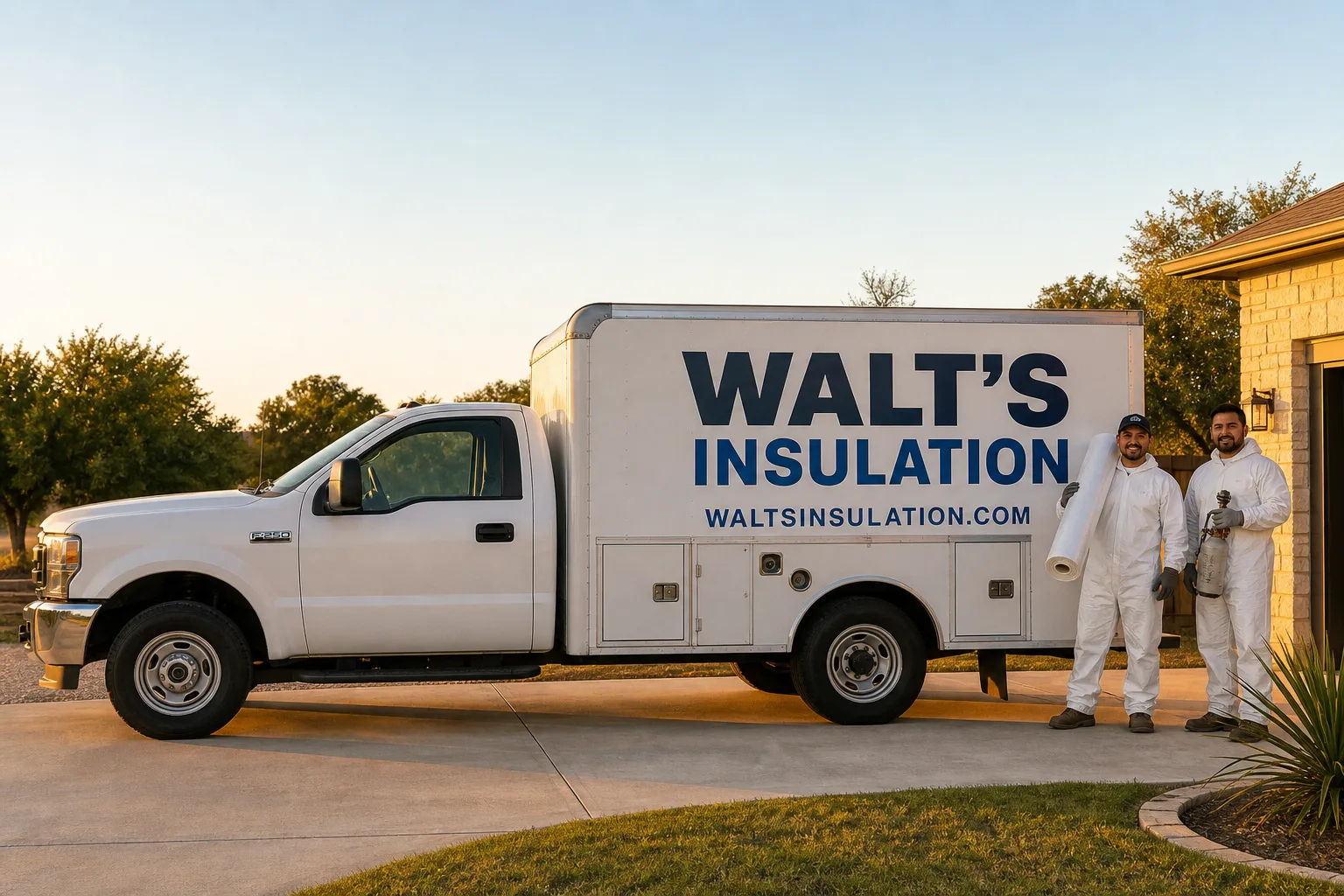
Fast, Reliable Attic Insulation Across Charlotte
Attic insulation replacement or top-up in Charlotte typically runs $1,400 to $4,800 depending on attic size and existing depth, and most jobs are finished in a single day. If your upstairs rooms bake in summer despite running the AC, there is a good chance your attic is the culprit. We work across Charlotte from Ballantyne to NoDa to Steele Creek, and the phone at (866) 751-4428 is answered by a live person around the clock. No voicemail trees, no call centers. Just someone who knows attics.
Walt’s Insulation is the one down the road from Charlotte homeowners who want a real fix, not a sales pitch. Our crew has spent years inside the attics and crawl spaces this city built during its banking boom. We know what Charlotte builders installed back then and what those attics turned into.
Why Walt’s Insulation Is Charlotte’s Preferred Attic Insulation Company
We are not a franchise. Walt Brenner founded this business in 2000, and we still operate the way we did on day one: owner-led, locally accountable, and picky about the details. Charlotte homeowners keep our number because when they call, a live person answers. Every time. That matters when you have an August attic reading 135°F and a second floor you can’t cool below 78°F.
Our Charlotte customers know exactly who is walking into their house. Every technician is background-checked and shows up in uniform. We have a published address and license number, not a P.O. box. Big-box and national installers sell volume. We sell accountability. If the job is not done right, the Done Right Promise covers it for life. That is our workmanship guarantee, and we do not soften it or hide behind fine print.
Charlotte’s housing stock has a specific set of problems. We see them every week in Ballantyne, Steele Creek, University City, and Mint Hill. Response to any Charlotte neighborhood is typically same-day for estimates and within 48 hours for most installs. Emergency work, including attic air sealing ahead of a storm or moisture crisis, gets prioritized.
Our Attic Insulation Services in Charlotte
Here is what we actually do for Charlotte homes, from top-ups to full replacements. Every job starts with an inspection. We measure existing depth, check for baffles, look for mold, and test airflow. Then we tell you what you need and what you don’t.
Blown-In Attic Insulation
This is the workhorse for Charlotte’s 1990s and 2000s attics. We blow Owens Corning AttiCat fiberglass or GreenFiber cellulose to a consistent depth, typically R-49 for Charlotte’s Zone 4A climate. Blown-in covers the gaps and voids that batts leave around wires, pipes, and top plates. In a 2004 home near Ballantyne Commons Parkway, we blew R-49 after air-sealing and the upstairs master dropped from 80°F to 72°F within a day.
Attic Batt Insulation
Batts still have their place, especially in tight attic spaces where a blower cannot reach cleanly. We install Johns Manville and Owens Corning batts with careful attention to compression. Compression kills R-value. In older Charlotte bungalows with shallow roof pitches, a careful batt job often beats a rushed blow-in. We also use batts for wall insulation on 1920s-1940s homes in Dilworth and Plaza Midwood, where original cavities are empty.
Attic Insulation Top-Up
The most common job we do in Charlotte. Builder-grade homes from the banking boom typically got R-19 to R-30 at construction. That fiberglass has settled. We top it up to a uniform R-49. But here is the Charlotte-specific detail that generic installers skip: we always check for soffit baffles first. Blowing new insulation over buried vents traps moisture against the roof deck. In Charlotte’s humid summers, that becomes mold. So a proper top-up here is not just adding insulation. It is fixing ventilation at the same time.
Attic Baffles & Ventilation Prep
This is the unglamorous part of the job that determines whether your new insulation works for ten years or turns into a mold problem. We install baffles at every soffit vent to keep airflow open from eave to ridge. For Charlotte homes where original blown fiberglass has settled below R-30, we clear the vents, install baffles, and then top up. Skipping this step is exactly how quickie installs create hot lines and moisture damage.
Attic Insulation Replacement
When insulation is moldy, pest-damaged, or saturated from roof leaks, topping up is not enough. We remove the old material, clean the attic deck, and install fresh. We use GreenFiber cellulose or Owens Corning fiberglass depending on the attic configuration and the homeowner’s goals. In Charlotte’s mixed-humid climate, getting the vapor management details right on a full replacement matters more than the material choice itself.
Trusted Brands We Service in Charlotte
We install and service insulation from the brands Charlotte homeowners ask for by name: Owens Corning, Icynene, GreenFiber, Rockwool, and Demilec. We are not locked into one manufacturer, so we recommend what fits the house, not what fits a distribution deal. For spray foam, we work with Demilec and Icynene. For blown-in, Owens Corning AttiCat and GreenFiber cellulose. Our Charlotte warehouse keeps common materials stocked so same-week installs happen regularly. If you are comparing quotes from other Charlotte contractors, ask them which specific product they plan to install. We will always tell you, and it will be one of the names above.
Common Attic Insulation Problems We See in Charlotte Homes
- Builder-grade R-19 batts that have slumped between trusses. 1990s and 2000s tract homes in Ballantyne and Steele Creek were built fast and insulated to minimum code. Those batts settle, leaving exposed top plates that pump humid summer air into living space.
- Settled blown fiberglass creating bare “hot lines” along ceiling joists. This is common in east Charlotte. When insulation drops below R-30, attic temperatures climb past 135°F on August afternoons. Your AC keeps running and your upstairs stays warm.
- Soffit vents buried by quickie top-ups without baffles. We see this constantly. A previous contractor blew insulation over the vents, trapped moisture against the roof deck, and the homeowner first notices the smell during a humid Charlotte summer.
- Cold spots in winter after Charlotte ice events. Charlotte is not Buffalo, but winter ice storms do hit. Homes with attic air leaks show frost melt patterns and ice dam formation at the eaves. The fix starts in the attic, not on the roof.
Pricing for Attic Insulation in Charlotte, NC
For Charlotte’s market, here are the ranges we actually see. An attic top-up on a 1,500-square-foot single-story typically runs $1,400 to $2,300. A full replacement on the same size attic, including removal and disposal, lands between $2,800 and $4,800. Adding baffles and soffit ventilation prep runs $400 to $900 depending on the number of vents. Air sealing of top plates, rim joists, and penetrations adds $500 to $1,200. Spray foam in Charlotte runs higher: $2.50 to $4.50 per square foot for open-cell depending on depth. Every estimate is free, and we do not charge a trip fee inside our service county. We will tell you the price before work starts, and the Done Right Promise covers the workmanship for life. Call (866) 751-4428 for an exact number on your house.
We Also Serve Cities Near Charlotte
Walt’s Insulation runs crews from our Charlotte office into the surrounding communities every week. We serve Harrisburg, Huntersville, Mount Holly, and Belmont with the same live-answer phones, background-checked crews, and lifetime Done Right Promise. If you are just outside Charlotte and wondering whether we cover your street, call (866) 751-4428 and ask. One call will tell you.
Why Charlotte’s Zone 4A Climate Changes How We Insulate Your Attic
Charlotte sits in IECC Climate Zone 4A. That is not government jargon. It is the single most important fact about your attic, and it determines how we approach every job. Zone 4A is a mixed-humid climate. In summer, humid outdoor air pushes inward through walls and rim joists. In winter, the flow reverses and indoor moisture drives toward the cold exterior. That bidirectional vapor drive means the vapor retarder placement that works in Wilmington, which sits in Zone 3, or Asheville, which sits in Zone 5, is wrong for Charlotte. Get it wrong and you trap moisture inside wall cavities or roof assemblies. Get it right and your insulation performs for decades.
For Charlotte attics, the correct retrofit sequence is air-seal the top plates and rim joists first, install baffles at every soffit vent, then blow insulation to R-49. That sequence is not optional here. A generic attic insulation page will tell you to add more insulation. Fine. But without air sealing and baffles first, that new insulation becomes a moisture trap. Our crew learned this sequence inside Zone 4A attics, not from a manual.
A Charlotte Attic We Will Not Forget
Our crew worked a 2004-built home near Ballantyne Commons Parkway where the original R-19 fiberglass batts had slumped below the top plates. The attic was reading 138°F on an August afternoon, and the homeowner could not get the upstairs below 80°F despite running the AC constantly. We air-sealed the top plates and rim joists, installed baffles at every soffit vent, and blew Owens Corning AttiCat to R-49. The next evening, the upstairs master bedroom sat at 72°F. The following month, their Duke Energy bill dropped 31%. That is not a marketing claim. That is a before-and-after number from one Charlotte attic.
How to Know if Your 2000s Charlotte Attic Has Builder-Grade R-19 That’s Underperforming
Climb the pull-down stairs and look. If the insulation sits at or below the top of the ceiling joists, that is R-19 or less. If the upstairs rooms run 5 to 8 degrees warmer than the main floor in summer, the attic is not doing its job. If your AC bill climbs every July and August while the thermostat stays the same, the attic is leaking conditioned air. In Charlotte’s 1990s and 2000s tracts from Ballantyne to Steele Creek to University City, builder-grade R-19 was standard. Current code for Zone 4A is R-49. Your attic is under-insulated by more than half. That is not a small gap. It is the difference between an attic that costs you money and one that saves it.
Serving Charlotte, NC - Our Local Coverage Area
We’re based in the Charlotte area and know this community well. Use the map below to see our service coverage - if you’re nearby, we can almost certainly help.
FAQs - Attic Insulation in Charlotte
Charlotte’s Zone 4A climate creates a bidirectional vapor drive that coastal Zone 3 and mountain Zone 5 homes do not experience in the same way. In Charlotte, summer humidity pushes moisture inward through top plates and rim joists, then winter cold reverses the flow. That means air sealing and vapor retarder placement must follow a Zone 4A-specific sequence: seal top plates first, add baffles, then blow to R-49. A contractor applying a coastal or mountain playbook here can create moisture traps that lead to mold. Call (866) 751-4428 and we will explain what your specific attic needs.
Look for insulation that sits level with or below the top of your ceiling joists. That indicates R-19 or less. Add these signs: upstairs rooms that will not cool below 78°F in August, AC bills that spike every July, and attic temperatures above 130°F on hot afternoons. Homes built in Ballantyne and Steele Creek during the banking boom almost always started with R-19 to R-30 minimum-code insulation. The gap between that and the R-49 your home needs is real money on your Duke Energy bill. Call (866) 751-4428 for a free attic check.
Yes, because Charlotte’s humid summers make buried soffit vents a mold risk. Baffles keep airflow open from eave to ridge. If a previous contractor blew insulation without installing baffles, your vents are likely buried and moisture is trapped against the roof deck. The fix is not another top-up. It is carefully pulling back insulation, installing baffles at every vent, and reblowing. We do that exact job in Charlotte every week.
Yes, and we have the numbers to prove it. On that 2004 Ballantyne home we mentioned, the owner’s Duke Energy bill dropped 31% the month after we air-sealed and blew R-49. Most Charlotte homes with R-19 to R-30 attics see 20 to 35% cooling season savings after upgrading to R-49 with proper air sealing. Your results depend on your home’s size and condition, but the physics is straightforward. Less heat radiating down from the attic means less AC runtime. Call (866) 751-4428 and we will give you an honest range for your house.
Most builder-grade insulation in Charlotte tract homes from the 1990s and 2000s is not under any meaningful warranty anymore, and it was installed to minimum code regardless. What matters more is the warranty on your new work. That is why we back every job with the Done Right Promise: lifetime workmanship. If it is not done right, we make it right. No runaround, no fine print, no expiration date. Call (866) 751-4428 for a free estimate and we will put that guarantee in writing.
Get Your Charlotte Attic Fixed Right
You have read this far because your attic is not doing its job. That is a fixable problem. Call Walt’s Insulation at (866) 751-4428 for a free estimate. A live person answers, 24/7. We will inspect your attic, tell you exactly what is wrong, and give you an upfront price. No trip charge inside our service county. Ask about our $40 off any repair over $200 and our permanent 10% senior and veteran discount. We are the one down the road from Charlotte homeowners who are done with hot upstairs rooms and climbing energy bills.
Written by Walt Brenner, Owner at Walt’s Insulation, serving Charlotte since 2000.