
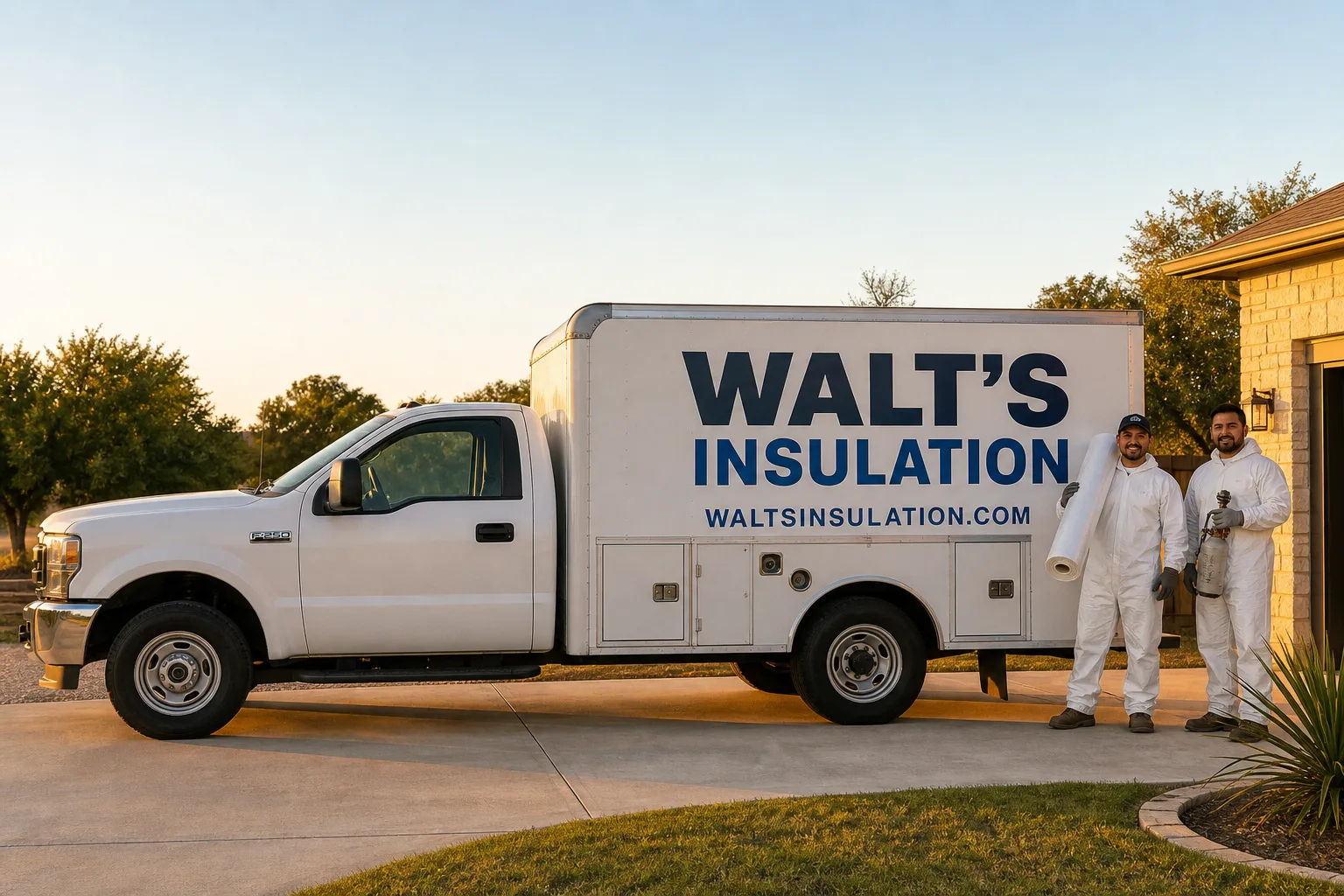
How Much Does Insulation Removal & Replacement Cost in San Antonio?
Our Insulation Removal & Replacement services in San Antonio typically cost between $1,200 and $4,500 for an average single-story home, depending on attic size, insulation type, and the condition of what’s being pulled out. Most homeowners in the San Antonio area pay around $2,000 to $3,000 for a full attic removal and re-install. Same-day estimates are available – call (866) 751-4428 and a live person answers.
Insulation Removal & Replacement Cost Breakdown (2026)
These ranges reflect actual San Antonio market pricing as of 2026. Your final number will depend on square footage, access conditions, and what we find once we’re in the attic – but these figures give you a real starting point, not a number pulled from a national average that has nothing to do with Bexar County.
| Service | Typical Cost Range (San Antonio, 2026) | Notes |
|---|---|---|
| Blown-in insulation removal only (attic, avg. 1,200-1,500 sq ft) | $600 - $1,100 | Vacuum extraction; includes bagging and haul-off |
| Batt/fiberglass removal only | $400 - $800 | Labor-intensive if batts are stapled or compressed |
| Spray foam removal (partial or full) | $900 - $2,200+ | Requires mechanical scraping; adds time and labor cost |
| Blown-in replacement (fiberglass, e.g., Owens Corning or Knauf) | $900 - $1,800 | Priced per job based on sq ft and R-value target |
| Blown-in replacement (cellulose, e.g., GreenFiber) | $800 - $1,600 | Good option for older San Antonio homes with tight attic access |
| Spray foam replacement (open-cell, e.g., Icynene or Demilec) | $1,500 - $3,200 | Common in newer builds in Stone Oak and Alamo Ranch |
| Batt replacement (fiberglass or Rockwool) | $700 - $1,400 | Used in walls and crawl spaces more than attics here |
| Attic air sealing (added during replacement) | $300 - $700 | Strongly recommended in San Antonio before re-insulating |
| Full removal + replacement (average 1,500 sq ft attic) | $1,800 - $3,800 | Most common project scope we see in San Antonio |
| Contaminated/rodent-damaged insulation removal | $1,200 - $2,500+ | Includes sanitizing; common in older Southside and Westside homes |
A few things push the final number higher in San Antonio specifically. Homes in older neighborhoods like Mahncke Park, King William, and Government Hill often have original attic configurations that are tighter to work in and sometimes contain older materials like vermiculite or compressed fiberglass that require more careful handling. On the other end, newer builds in Alamo Ranch and Cibolo often have more open attic access but larger square footage – which cuts time but not necessarily cost. We always do a visual inspection before quoting, so you’re never handed a number out of thin air.
One thing worth knowing: attic air sealing at the same time as replacement is almost always the right call in San Antonio. The city’s extreme summer heat – we regularly see attic temperatures above 140°F from June through September – means that even fresh insulation underperforms if air is bypassing it through gaps around light fixtures, plumbing penetrations, and attic hatches. Adding air sealing at replacement time typically costs $300-$700 and can cut the payback period on your insulation investment by years.
What Affects Insulation Removal & Replacement Pricing in San Antonio
- Attic square footage and ceiling height: This is the biggest single driver. A 1,200 sq ft ranch-style home in Helotes costs meaningfully less to service than a 2,800 sq ft two-story in Boerne or Schertz, even if the attic configuration is simpler. We measure the actual insulated area, not just the home’s footprint.
- Type of insulation being removed: Loose-fill blown-in (the most common in San Antonio attics) is extracted by vacuum and is relatively straightforward. Old batt insulation that’s been compressed by foot traffic or animal activity takes longer to pull. Spray foam is the most labor-intensive removal job there is – it has to be mechanically scraped, which adds both time and disposal cost.
- Contamination and damage level: Rat and mouse activity is a real issue in older homes across the Southside, near the railroad corridors, and in some of the established neighborhoods north of Loop 1604. When insulation is soaked in urine or laced with droppings, it requires not just removal but sanitizing and sometimes attic fogging – all of which adds to the total. We’ve seen jobs where contamination discovery added $600 to $1,200 over the original removal estimate.
- Attic access and configuration: Homes with a single small scuttle access point take longer to work in than those with pull-down stairs. Low-pitched rooflines – common in mid-century homes in the Monte Vista and Olmos Park areas – limit how far technicians can reach into the attic and slow the job. Difficult access adds labor time, which adds cost.
- Target R-value for replacement: CPS Energy and Texas building codes suggest R-38 to R-60 for San Antonio attics, depending on the home’s age and construction. The higher the R-value you’re installing, the more material is required. Moving from a degraded R-19 to a code-appropriate R-49, for example, means installing roughly 15 to 16 inches of blown-in fiberglass – a meaningfully different material cost than patching to R-30.
- Timing and current material costs: Insulation prices in the San Antonio market follow broader supply chain patterns. Fiberglass products from Owens Corning and Knauf have been relatively stable in 2025 and into 2026, but spray foam components – particularly the isocyanate used in open-cell formulations – have seen spot price swings. If you’re comparing quotes from different seasons, material costs may account for some of the difference.
How to Save on Insulation Removal & Replacement
Getting the most out of your insulation budget in San Antonio comes down to a few practical decisions, not just finding the lowest bid.
Get a second opinion before you commit
We offer a free second opinion on any written estimate you’ve received from another contractor. This isn’t a sales tactic – it’s a real service. We’ve seen homeowners in San Antonio handed quotes for full removal when a partial removal and top-off would have done the job. We’ve also seen the opposite: a contractor quoting a patch when the contamination level genuinely called for a full tear-out. A second set of eyes costs you nothing. Call (866) 751-4428 and we’ll schedule it, no trip charge inside Bexar County.
Bundle removal with air sealing
Scheduling attic air sealing at the same time as your removal and replacement is almost always cheaper than doing them separately. The attic is already cleared, the crew is already there, and the penetrations are exposed. Doing it as a combined project in San Antonio typically saves $150-$300 compared to scheduling two separate visits.
Ask about the $40 off repair offer
We take $40 off any repair over $200 – no coupon needed, just ask when you call. For partial removal and patch projects, this applies.
Check CPS Energy rebates
CPS Energy, San Antonio’s municipal utility, has historically offered rebates for attic insulation upgrades that bring homes up to or above code R-values. Rebate programs change, so it’s worth checking the current CPS Energy rebate portal before your project – in some years these have covered $200-$400 of upgrade costs for qualifying homes.
Use the senior and veteran discount – always
Walt’s Insulation gives a permanent 10% discount to seniors and veterans, on every job, every time. It’s not a promotional period. If that’s you, mention it when you call and we’ll apply it to your estimate from the start.
Don’t over-spec the material
San Antonio’s climate calls for a high R-value, but there’s a point of diminishing returns. Going from R-30 to R-49 is a meaningful upgrade. Going from R-49 to R-60 in a single-story production home that doesn’t have extreme air infiltration issues is often not worth the added cost. We’ll tell you honestly where the sweet spot is for your specific home – and that advice doesn’t change based on what’s most profitable to install.
Signs You Actually Need Full Removal (Not Just a Top-Off)
This question comes up in almost every estimate call we take for Insulation Removal & Replacement in San Antonio. The honest answer is that full removal is not always necessary – but when it is, skipping it is expensive in the long run.
You almost certainly need full removal if:
- There is visible rodent damage, droppings, or urine saturation throughout the insulation layer. Adding new material on top of contaminated old material doesn’t fix the air quality problem – it buries it.
- The existing insulation is wet or has been wet repeatedly due to a roof leak. Wet fiberglass loses virtually all of its thermal value and becomes a mold substrate. This is especially relevant in San Antonio after major hail events, which are a near-annual occurrence here.
- The material is vermiculite, certain older blown-in products, or has been confirmed to contain asbestos. This requires abatement, not standard removal – call us first and we’ll walk you through what that process looks like and who to involve.
- The depth has degraded below R-11 and the existing material is clumped, compressed, or shifted so badly that topping off would leave cold spots no matter how much new product is added on top.
Top-offs without removal can work well when the existing material is structurally intact, dry, and free of contamination – just under-depth. We see this often in 1990s-era homes in areas like Converse, Live Oak, and Universal City where the original installation was code-compliant at the time but simply hasn’t kept pace with current R-value recommendations.
San Antonio-Specific Factors That Affect Your Insulation Decision
San Antonio’s climate sits in IECC Zone 2, which shapes both the minimum R-values required and the type of insulation that performs best here. Unlike cities in colder climates where vapor drive is primarily from the outside in during winter, San Antonio deals with moisture moving in multiple directions depending on the season – warm humid air pushing in from the Gulf in spring and fall, and brutal heat-driven stack effect pressure in summer.
This matters for removal and replacement decisions because it affects which replacement product makes the most sense. In many San Antonio attics, we recommend blown-in fiberglass from brands like Owens Corning or Johns Manville over cellulose for this reason – fiberglass doesn’t absorb moisture the way cellulose can during those wet spring stretches we get in April and May. GreenFiber cellulose has its place and we install it, but the material choice should follow the building’s conditions, not just price.
The other factor specific to San Antonio is the city’s tree canopy in older neighborhoods. Homes in Beacon Hill, Tobin Hill, and the Alta Vista area often have mature oak and pecan trees that drop debris into the attic through ridge vents and soffit gaps. That debris accumulates in the insulation over decades, compressing it and sometimes creating nesting habitat. Removal jobs in these neighborhoods often take longer than a comparable home in a newer subdivision – that’s just the reality, and we factor it into estimates honestly rather than surprising you on the invoice.
What the Removal Process Actually Looks Like
We walk through this with every homeowner who calls us at Walt’s, because the removal day can feel disruptive if you don’t know what to expect.
Our technicians – background-checked, uniformed, and identifiable before they ever walk through your door – start by protecting the interior of your home. Drop cloths go down from the attic hatch to the exterior door. The vacuum extraction hose runs outside to a disposal truck; the process is noisy but contained. For an average San Antonio attic around 1,200 to 1,500 square feet, extraction typically takes 3 to 5 hours. Larger homes or contaminated attics run longer.
After extraction, the attic deck is inspected. If we find anything unexpected – evidence of past water intrusion, structural concerns with the decking, evidence of active pest activity – we stop and show you before proceeding. That’s not a hold-up tactic; it’s how real accountability works. We’ve been operating as the locally owned alternative to the national chains since 2000, and Walt Brenner built this business on the principle that a homeowner should never find out about a problem after the fact.
Replacement installation typically follows immediately on the same day for most projects, or the next morning for larger or more complex jobs. We set the equipment, blow to depth markers, and leave you with a final depth and R-value documentation you can keep for your records – useful if you ever sell the home or file for a CPS Energy rebate.
FAQs – Insulation Removal & Replacement Cost in San Antonio
How much does full attic insulation removal and replacement cost in San Antonio?
For an average San Antonio home with an attic between 1,200 and 1,800 square feet, full removal and replacement typically runs $1,800 to $3,800. Smaller homes or straightforward blown-in jobs can come in below that range; larger homes, contaminated attics, or projects involving spray foam removal can run higher. The only way to get a number specific to your home is a free estimate – call (866) 751-4428 and we’ll schedule one with no trip charge in Bexar County.
Is it cheaper to just add insulation on top of the old stuff?
Yes, a top-off is almost always cheaper than full removal – typically $800 to $1,800 less depending on project size. But a top-off only makes sense if the existing insulation is dry, structurally intact, and free of contamination. If you’re dealing with rodent damage, water intrusion, or severely degraded material, adding new product on top doesn’t fix the underlying problem. We’ll tell you honestly which situation you’re in – we’d rather lose a removal job than have a homeowner spend money on a project that doesn’t solve their problem.
How long does the removal and replacement process take?
Most residential projects in San Antonio take one full day. A standard 1,200-1,500 sq ft attic extraction runs 3-5 hours; replacement installation follows the same day in most cases. Larger homes, difficult attic access, or contaminated insulation that requires sanitizing can stretch a project to a day and a half or two days. We give you a realistic timeline before the crew shows up – not after.
Does homeowner’s insurance cover insulation removal in San Antonio?
It depends on the cause. If the insulation damage resulted from a covered event – a hail storm that cracked your decking and allowed water intrusion, or a sudden pipe burst – many policies will cover removal and replacement as part of the structural damage claim. Rodent damage and general deterioration over time are almost never covered. We can provide detailed documentation (photos, scope of work, material specs) that supports an insurance claim if you’re going that route. Call (866) 751-4428 to discuss what we can prepare for you.
What R-value should I replace to in San Antonio?
The current recommendation for San Antonio (IECC Zone 2) is R-38 to R-49 for attic insulation, with R-49 being the sweet spot most often cited by CPS Energy for rebate eligibility. Going to R-60 is physically possible but rarely delivers enough additional energy savings to justify the added cost in this climate zone. We measure your existing depth, calculate your current effective R-value, and show you the gap before we quote a replacement depth – so you know exactly what you’re getting and why. Call (866) 751-4428 for a free estimate.
Are there any permits required for insulation removal in San Antonio?
In most cases, standard attic insulation removal and replacement in San Antonio does not require a permit through the City of San Antonio Development Services Department. However, if the project involves structural work, HVAC modifications, or the removal of suspected hazardous materials like asbestos-containing products, the permit and abatement picture changes. Walt’s Insulation operates with a published license number and handles the documentation side of every project – if a permit is needed for your specific scope, we’ll tell you upfront and walk you through it.
Key Takeaways
- Full insulation removal and replacement in San Antonio typically costs $1,800 to $3,800 for an average-sized home.
- Removal-only jobs run $400 to $1,100 for standard materials; spray foam removal costs more.
- San Antonio’s heat, humidity cycles, and older housing stock in neighborhoods like King William, Mahncke Park, and Southside add variables that affect pricing – get an on-site estimate, not a phone quote.
- Bundling air sealing with replacement almost always saves money compared to doing them separately.
- CPS Energy rebates may offset part of your cost – check current offerings before your project.
- Seniors and veterans receive a permanent 10% discount on every Walt’s Insulation job.
- Walt’s offers a free second opinion on any written estimate – no trip charge in Bexar County.
- All work is covered by the Done Right Promise: lifetime workmanship, no runaround.
Get a Free Estimate from Walt’s Insulation in San Antonio
Walt Brenner and the team at Walt’s Insulation have been doing this work in San Antonio since 2000. We’re not a franchise or a call center – we’re a locally owned, owner-operated business with a published address and a real license number, and we back every job with the Done Right Promise. If the work isn’t right, we make it right. Full stop.
If you’ve already got a quote from someone else and something doesn’t feel right about it, take us up on the free second opinion. If you’re starting from scratch and just want honest numbers without a sales pitch, we can do that too. A live person answers every call at (866) 751-4428, 24/7 – you will not reach a voicemail. From our home base in San Antonio, we cover Bexar County with no trip charge and serve surrounding communities throughout the region.
Call (866) 751-4428 today. Estimates are free, and the person who picks up can usually get you scheduled faster than you’d expect.
Pricing reflects the San Antonio market as of 2026. Walt’s Insulation offers free estimates – call (866) 751-4428.
Written by Walt Brenner, Owner at Walt’s Insulation, serving San Antonio since 2000.
What Our Customers Say
"The house had rats in the attic insulation and a smell we could not place. Walt's crew pulled all of it, sealed the gaps where they were getting in, sanitized, and put in new blown-in. He sent photos of the sealed openings so I could see it done."
- Rosa Delgado"Walt came out himself, stuck his head in the attic, and told me I had about four inches where I needed fourteen. No sales pitch, just the number and what it would cost to fix it. Crew was here two days later."
- Carl Meadows"We had the walls of our old house filled with foam through small holes from the outside. Patched and painted the same afternoon. The bedrooms hold heat now and the furnace runs a lot less."
- Linda Baumgartner