
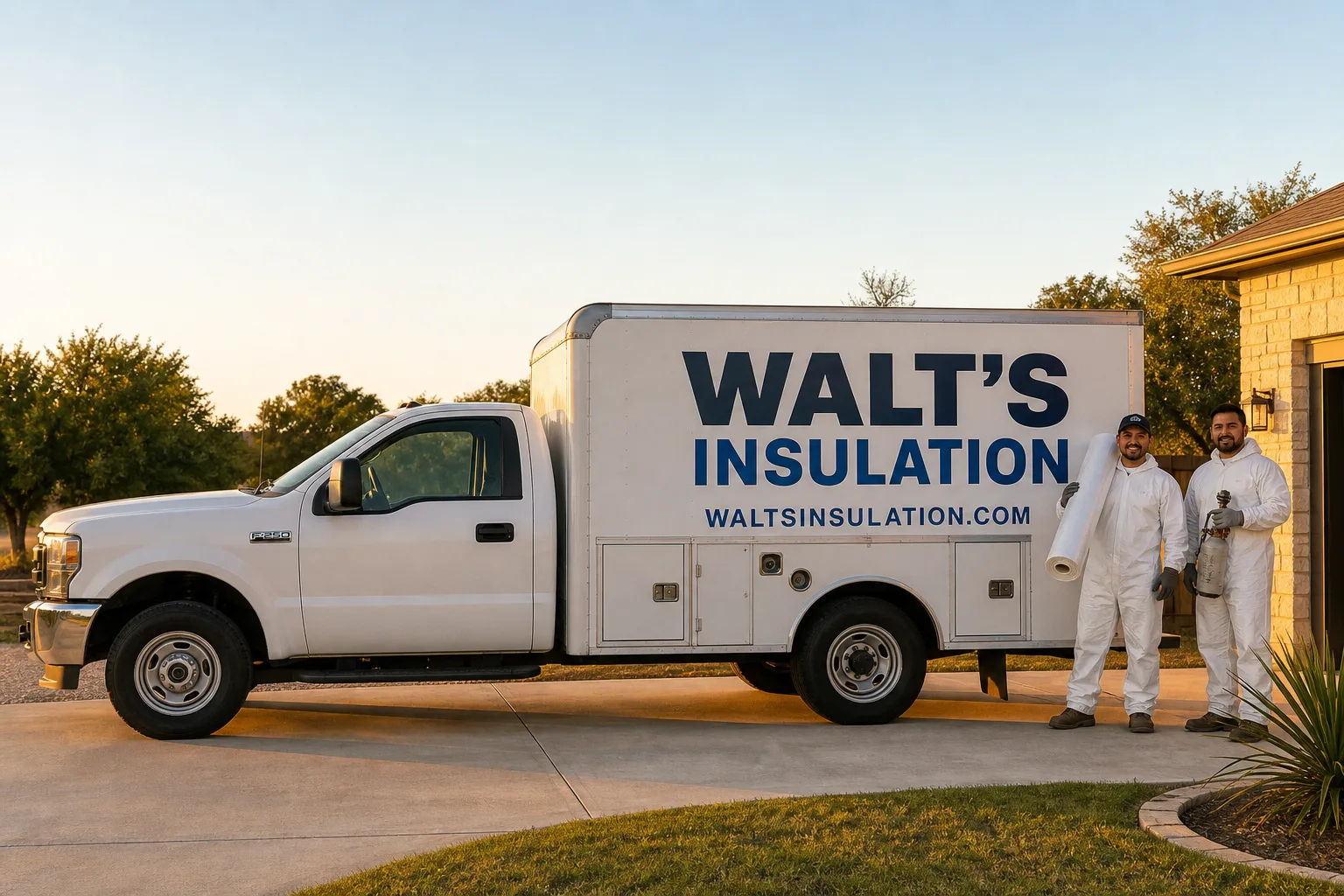
How Much Does Wall Insulation Cost in San Antonio?
Wall insulation in San Antonio typically costs between $1.50 and $4.50 per square foot, depending on the insulation type, wall access method, and total square footage of the project. For a 1,500-square-foot San Antonio home with standard stud-frame exterior walls, most homeowners pay somewhere in the $2,200 to $5,800 range for a full installation – though spray foam on a two-story home with limited attic access can push that higher. The good news: San Antonio’s climate makes our Wall Insulation services one of the highest-return improvements you can make, and most jobs qualify for federal tax credits that offset the upfront cost.
Wall Insulation Cost Breakdown (2026)
Wall insulation in San Antonio costs $1.50 to $4.50 per square foot installed, depending on the material and method. Here’s how the most common options break down for this market:
| Insulation Type | Method | Cost Per Sq Ft (Installed) | Typical Job Cost (1,500 sq ft home) |
|---|---|---|---|
| Blown-in fiberglass (dense-pack) | Retrofit – small holes drilled in exterior | $1.50 – $2.50 | $1,800 – $3,200 |
| Blown-in cellulose (dense-pack) | Retrofit – small holes drilled in exterior | $1.40 – $2.20 | $1,700 – $2,900 |
| Fiberglass batts (open wall) | New construction or remodel with open studs | $0.90 – $1.60 | $1,100 – $2,200 |
| Rockwool / mineral wool batts | New construction or remodel with open studs | $1.80 – $2.80 | $2,200 – $3,800 |
| Open-cell spray foam | New construction or open-wall remodel | $1.80 – $3.00 | $2,400 – $4,200 |
| Closed-cell spray foam | New construction, open wall, or injection retrofit | $3.00 – $4.50 | $3,800 – $6,500+ |
| Injection foam (tripolymer) | Retrofit – small holes, no drywall removal | $2.00 – $3.50 | $2,500 – $4,800 |
A note on the ranges above: these reflect actual San Antonio market pricing as of early 2026, factoring in local labor rates, material costs, and the specific challenges of insulating homes in Bexar County – not national averages that rarely match what local contractors charge. Homes in older neighborhoods like Mahncke Park, Terrell Hills, or the King William Historic District often fall toward the higher end because of non-standard wall construction, plaster-over-lath walls, or restrictions on exterior drilling that require a different approach.
What’s Included in These Prices?
- Material cost and installation labor
- Drilling and patching (for retrofit blown-in jobs) – holes are typically 1.5 to 2 inches and are patched and painted to match
- Basic vapor retarder where required by San Antonio building code
- Cleanup and disposal of any old or degraded insulation that’s removed
What’s generally not included: drywall replacement on major remodel jobs, painting beyond the drill-hole patches, or any mold remediation if the wall cavity has moisture damage. A good contractor flags these upfront. We always do.
What Affects Wall Insulation Pricing in San Antonio
Six factors consistently move the needle on price in this market. Knowing them helps you read a quote – and spot when something doesn’t add up.
- Insulation type and R-value target: San Antonio sits in IECC Climate Zone 2B, which means exterior walls in new construction need to hit R-13 to R-20 depending on the assembly. Retrofit projects aren’t always held to new-construction code, but going higher than the minimum reduces your cooling load noticeably. Closed-cell spray foam gets you to higher R-values in thinner cavities, which matters in older homes with 2×4 framing rather than the 2×6 framing more common in newer Alamo Ranch or Stone Oak builds.
- Access method – retrofit vs. open wall: Retrofit (drilling small holes through the exterior siding or interior drywall) typically costs more in labor per square foot than insulating an open stud bay during a remodel. But it’s almost always cheaper overall because you’re not tearing out and rebuilding walls. For most San Antonio homeowners adding insulation to an existing house, retrofit dense-pack or injection foam is the right call.
- Wall construction type: Standard 2×4 or 2×6 stud-frame walls are the easiest and cheapest to work with. Homes built before the mid-1970s in older San Antonio neighborhoods sometimes have solid masonry walls, double-brick construction, or plaster applied directly to masonry – those require a completely different approach (usually interior rigid foam boards or a flash-and-batt system), and pricing reflects that.
- Linear footage of exterior wall: The more exterior wall surface a home has, the more material and labor time is involved. A single-story ranch in Converse or Helotes with the same square footage as a two-story in Shavano Park will have more linear wall footage relative to its footprint, which affects both material quantity and staging time for the crew.
- San Antonio’s heat load on materials: This one is specific to our climate. Summer attic temperatures in San Antonio regularly hit 140 to 160 degrees Fahrenheit, and that radiant heat pushes aggressively through west-facing walls from about 2 p.m. onward. Homes in subdivisions built in the 1980s and 1990s on the northwest side – Leon Valley, Balcones Heights, parts of Castle Hills – were often built with minimal wall insulation to code at the time (R-11 or less). Adding a higher-performing product like Rockwool or closed-cell spray foam to those walls is more expensive upfront but makes a measurable difference on utility bills fast. CPS Energy data we see from homeowners consistently shows 15-25% cooling load reduction after a proper retrofit.
- Permits and inspections: San Antonio and Bexar County don’t always require a permit for insulation-only retrofits on existing homes, but any work done as part of a larger remodel typically triggers an inspection of the wall assembly. We pull permits when required and can walk you through what applies to your specific project. Skipping permits when they’re required isn’t a savings – it’s a liability when you sell.
Wall Insulation Types: Which One Is Right for Your San Antonio Home?
We install materials from Owens Corning, Rockwool, Icynene, Johns Manville, CertainTeed, Demilec, Knauf, and GreenFiber – so we’re not going to steer you toward one product because it’s the only one we carry. Here’s how the main options compare for San Antonio conditions specifically.
Dense-Pack Blown-In Fiberglass or Cellulose
This is the most common retrofit solution we install in San Antonio. The process involves drilling a series of small holes in the exterior siding (or occasionally through interior drywall), blowing insulation in under pressure so it fills the cavity completely, then patching and painting. GreenFiber cellulose and Owens Corning fiberglass are both strong performers. Cellulose is made from recycled content and tends to be slightly less expensive; fiberglass is more resistant to moisture absorption, which matters in the Hill Country fringe neighborhoods west of the city where humidity swings are wider. Both land in the R-13 to R-15 range in a standard 2×4 wall cavity.
Rockwool / Mineral Wool Batts
Rockwool is the product we recommend most often for open-wall remodel projects in San Antonio. It’s fire-resistant to 1,200 degrees Fahrenheit, it doesn’t support mold, and it provides meaningful sound attenuation – which matters if you’re working on a home near Loop 410, Highway 151, or one of the flightpaths around JBSA-Lackland. The R-15 Rockwool batt fits a 2×4 stud bay and is one of the best dollar-for-R-value combinations available right now. It costs more than standard fiberglass batts from Johns Manville or CertainTeed, but for most homeowners doing a room addition or gut renovation, the durability justifies it.
Spray Foam – Open Cell vs. Closed Cell
Spray foam gives you the highest R-value per inch and seals air gaps at the same time. Open-cell foam from Icynene or Demilec is softer, expands aggressively, and is appropriate for interior wall applications where moisture isn’t a concern. Closed-cell foam is denser, water-resistant, and provides structural rigidity – relevant in some of San Antonio’s older frame homes that have experienced settling. Both require a licensed applicator and proper respiratory protection during installation. This is not a DIY product. The off-gassing during application is significant, and improper mixing ratios create a product that never cures correctly and has to be removed entirely. We’ve been called to correct foam jobs done wrong more times than we’d like to count.
Injection Foam
Injection foam is a tripolymer or polyurethane foam injected in liquid form that expands to fill the cavity without the pressure of dense-pack. It’s a strong retrofit option for situations where the exterior siding is fragile or historically significant and can’t be drilled safely, because injection can sometimes be done from the interior. Cost runs higher than blown-in, but it’s cleaner and leaves a smaller footprint on finished surfaces.
How to Save on Wall Insulation in San Antonio
A few things that actually move the number down – not vague advice, but things you can act on right now.
Federal Tax Credits (IRA Section 25C)
The Inflation Reduction Act’s 25C credit covers 30% of the cost of insulation materials, up to $1,200 per year, for existing primary residences. This is a tax credit, not a deduction, so it comes directly off what you owe. The credit applies to insulation materials that meet the IECC standards for your climate zone – which most products we install do. Talk to your tax professional about how to claim it. We can provide the documentation you need, including the manufacturer’s certification statements.
CPS Energy Rebates
CPS Energy offers rebates for qualifying insulation upgrades in San Antonio. Programs change annually, but insulation rebates have been available continuously for the past several years. At time of writing, CPS offers rebates tied to energy audits and improvement packages. Call them directly or ask us – we’ve helped San Antonio homeowners navigate CPS rebate paperwork many times and know what documentation they actually require.
Combine Projects
If your attic insulation also needs work, doing both wall and attic insulation at the same time reduces mobilization cost. Sending one crew for one day instead of two separate crews on two separate days saves setup time that you’d otherwise pay for twice. Same logic applies if you’re doing a wall insulation retrofit alongside a bathroom or kitchen remodel where walls are already open.
Get a Real Second Opinion
We offer a free second opinion on any written estimate – no strings, no sales pitch. If another contractor has quoted you something and the number feels off, or if the scope seems vague, call us at (866) 751-4428 and we’ll look it over. We’ve caught material spec errors, access-method mismatches, and outright overcharges more than once. Even when the other quote is fair, you’ll feel better knowing it.
Ask About the Senior and Veteran Discount
We offer a permanent 10% discount for seniors and veterans, on every job, every time. Not a one-time promotion – just something we do. If that applies to you, say so when you call and we’ll apply it to your estimate.
Don’t Wait Until It’s Urgent
In San Antonio, the insulation pain point hits hardest in June, July, and August. Scheduling a wall insulation project in late February, March, or October – outside the peak HVAC season – gives us more scheduling flexibility and sometimes allows for a tighter window between estimate and installation. It also means you’re not calling from a 95-degree house with no wiggle room on timing.
Wall Insulation and San Antonio’s Climate: Why It Matters More Here
San Antonio averages 220 to 230 days of sunshine per year and regularly sees summer high temperatures above 100 degrees Fahrenheit. The west and southwest faces of any San Antonio home take a beating from June through September. Inadequately insulated walls on those exposures can raise interior temperatures noticeably even with a functioning HVAC system – because the air conditioner is fighting conducted heat through the wall assembly, not just solar gain through windows.
This is especially pronounced in the ranch-style and split-level homes built throughout the 1970s and 1980s in neighborhoods like Windcrest, Universal City, and the older sections of Schertz. Those homes were built under energy codes that seem almost unrecognizable today – R-11 batts in 2×4 walls were the norm, and many were installed without proper coverage at top and bottom plates, meaning air infiltration on top of the insulation gap. A dense-pack retrofit in those walls typically takes the effective thermal performance from something close to R-8 (accounting for installation gaps and thermal bridging) up to R-13 or higher. That’s a real, measurable change in comfort – not a sales number.
If you’re curious about the full scope of what a wall insulation project covers or want to understand how it connects to your home’s overall envelope, our Wall Insulation in San Antonio page has the full rundown, or you can start from the home page to see all the services we offer.
FAQs – Wall Insulation Cost in San Antonio
How much does wall insulation cost per square foot in San Antonio?
Wall insulation in San Antonio costs between $1.40 and $4.50 per square foot installed, depending on the insulation type and access method. Blown-in cellulose retrofit is the least expensive option at $1.40 to $2.20 per square foot. Closed-cell spray foam is the most expensive at $3.00 to $4.50 per square foot. For a typical 1,500-square-foot San Antonio home, expect a total project cost between $1,700 and $5,800 for most scenarios. Call (866) 751-4428 for a free estimate specific to your home’s size and construction.
Is it cheaper to repair or replace wall insulation?
Adding insulation to existing walls (retrofit) without removing drywall or siding costs 30 to 50% less than a full replacement that involves tearing out walls. In most San Antonio homes, retrofit dense-pack or injection foam gives you 90 to 95% of the thermal benefit of a full replacement at a fraction of the cost. Full replacement only makes sense if the existing insulation is water-damaged, contaminated with mold or rodent activity, or if the walls are already open for a remodel. We’ll tell you honestly which situation you’re in – a quick inspection makes it clear.
Does wall insulation help in San Antonio’s heat, or is it mainly for cold climates?
Wall insulation is, if anything, more impactful in San Antonio’s climate than in cold climates. In a heating-dominated climate, the attic is usually the primary heat-loss point. In San Antonio, the combination of intense sun on west and south-facing walls and an extended cooling season means inadequate wall insulation directly forces your HVAC system to work harder for six or more months a year. Homeowners in neighborhoods like Alamo Ranch, Helotes, and the Stone Oak area who retrofit wall insulation consistently report noticeable comfort improvement in west-facing rooms within the first summer. The ROI here is faster than in markets with milder summers.
Can wall insulation be added without removing drywall?
Yes, in most cases. Retrofit blown-in and injection foam methods both add insulation to existing walls through small holes drilled in the exterior siding or interior drywall – usually 1.5 to 2 inches in diameter – that are patched and painted afterward. Most San Antonio homeowners can’t tell where the holes were once the job is done. The only situations where drywall removal makes sense are when walls are already open for a remodel, when the existing insulation is contaminated and needs physical removal, or when a solid masonry wall requires an interior rigid foam system. Call (866) 751-4428 and we’ll let you know which approach fits your home.
Are there tax credits or rebates for wall insulation in San Antonio in 2026?
Yes. The federal 25C tax credit covers 30% of insulation material costs, up to $1,200 per year, for qualifying insulation in existing primary residences. CPS Energy also offers rebates for qualifying energy-efficiency upgrades – the specific rebate amounts for insulation projects vary by program year, so confirm current amounts directly with CPS or ask us when you call. These incentives can reduce a $3,500 wall insulation project by $1,000 or more when stacked correctly. We can walk you through what documentation you’ll need. Call (866) 751-4428 for details.
How long does wall insulation take to install in a typical San Antonio home?
A retrofit blown-in or injection foam project for a 1,500 to 2,000-square-foot single-story home typically takes one full day – six to eight hours including drilling, filling, patching, and cleanup. Two-story homes or homes with complex exterior materials (stucco, fiber cement, or historic masonry) can take a day and a half to two days. Open-wall batt installations during remodels are faster per linear foot but depend on the overall pace of the remodel. We give you an accurate time estimate upfront so you can plan your day – no surprises.
Why San Antonio Homeowners Choose Walt’s Insulation
Walt Brenner started this business in 2000 with a straightforward idea: do the work right, stand behind it, and be reachable. Over 25 years later, that’s still how we operate. We’re not a franchise with a local phone number routed to a call center – we’re a locally owned, owner-operated company with a published address, a real license number, and a phone that a live person answers 24 hours a day, seven days a week. When you call us at 11 p.m. because your energy bill just arrived and something feels wrong, a real person picks up.
Every technician who shows up at your house is background-checked and in a Walt’s uniform. You’ll know who to expect before they arrive. Every job is covered by our Done Right Promise – lifetime workmanship, which means if something isn’t done right, we make it right. Not after a lengthy dispute process, not after you chase us down. We make it right.
We’re also happy to give you a free second opinion on any written estimate you’ve already received. If you’ve been quoted on wall insulation by another contractor in San Antonio and something about the number or the scope doesn’t sit right, call us. There’s no charge for that conversation, and we’ll be straight with you about what we find – even if the other quote turns out to be fair.
Walt’s Insulation installs materials from Owens Corning, Rockwool, Icynene, Johns Manville, CertainTeed, Demilec, Knauf, and GreenFiber. When we recommend a product, it’s because it’s the right fit for your wall type, your home’s climate exposure, and your budget – not because it’s what we happened to load on the truck that morning.
Seniors and veterans receive a permanent 10% discount on every job. No expiration date, no “limited time” fine print. That’s just our policy.
Key Takeaways
- Wall insulation in San Antonio costs $1.40 to $4.50 per square foot installed in 2026, with most homes paying $1,700 to $5,800 for a full retrofit.
- Retrofit blown-in (cellulose or fiberglass) is the most common and cost-effective method for existing San Antonio homes – no drywall removal required in most cases.
- San Antonio’s climate (IECC Zone 2B, 220+ sunny days, 100+ degree summers) makes wall insulation a high-ROI investment, especially on west- and south-facing walls.
- Older neighborhoods – Mahncke Park, Windcrest, Leon Valley, King William – often have non-standard wall construction that affects both method and cost.
- Federal 25C tax credits (30%, up to $1,200/year) and CPS Energy rebates can significantly offset the cost.
- Walt’s Insulation offers free estimates, free second opinions on written estimates, no trip charge inside the service county, and a permanent 10% discount for seniors and veterans.
- All work is covered by the Done Right Promise – lifetime workmanship with no runaround.
Get a Free Wall Insulation Estimate in San Antonio
If you’re trying to figure out what wall insulation would actually cost for your specific San Antonio home – not a national average, not a ballpark that doubles when the crew shows up – call us directly. We’ll ask you the right questions, give you a straight number, and schedule an estimate at your convenience. No trip charge inside the service county. No voicemail. A live person answers at (866) 751-4428, day or night.
Walt Brenner and the crew at Walt’s Insulation have been doing this work in San Antonio since 2000. We know this market, we know these neighborhoods, and we know what it costs to do the job right. That’s what we’ll tell you.
Pricing reflects the San Antonio market as of 2026. Walt’s Insulation offers free estimates – call (866) 751-4428.
Written by Walt Brenner, Owner at Walt’s Insulation, serving San Antonio since 2000.
What Our Customers Say
"Good honest work on the attic. The price was a little higher than one online quote, but Walt is the one who actually showed up and the one whose name is on the truck, and that was worth it to us."
- Helen Tran"Radiant barrier and new insulation in one visit. Walt explained what the foil actually does and what it does not, which nobody else bothered to. Electric bill in July was the lowest it has been in this house."
- Nadia Haddad"Air sealing first, then blown-in over the top. He found a bathroom fan venting straight into the attic and fixed that too. Written price before they started, same price when they finished."
- Arjun Mehta